Mission and vision

Mission
Anyone who needs help should be able to stay at the wheel. That is why we make digital tools that are gentle, simple and yours. And if someone else has already made it well, we take you there.
Vision
We think help works better when you get to choose for yourself. That is why we make tools that are accessible and open, and that you can use together.

E-powerment is a small studio. We think up, design and build digital tools for care and support: for people who want to do something themselves, and for care professionals looking for something to use together with a client.

Many of the tools come from our experiences in the social sector; they were made for situations we came across there. In custom work, clients and care professionals think along from the start.

We do three things. We make tools ourselves: there are 44 on this site now. We point to tools by others: 47 Dutch apps and websites, with who makes each one, what it costs and who it is for. And for organisations we make things to order.

Our own tools are free and work without an account. Most of them are small: a scale from 0 to 10, a card for an appointment, a breathing exercise, a wheel with questions. You use them in the browser, on your phone or on a laptop on the table, and many of them can be printed.

The tools that run on this site itself send nothing of what you fill in anywhere, not to us either. Each tool says what happens to your data. The website uses no cookies and no trackers.

We write in plain language (level B1) and build to WCAG 2.2 level AA, so that as many people as possible can use the site. Every page is checked for that automatically. What is not right yet is in the accessibility statement.

The knowledge base has 26 pieces for care professionals and organisations: guides, explainers and checklists about choosing and introducing digital tools, about privacy and about plain language.

For the content we lean on what others have researched and described; the sources are listed. If something is wrong, or works differently in practice, we would like to hear it.

We do not have to make everything ourselves. If someone else has already made something good, we point you to it.
What we promise

  • Drawing of four hands holding one sheet of paper together.

    For everyone

    We write in plain language and build things to work on the phone you already have. Also when reading is hard for you, or when you have had a long day. If you need a manual to use it, we have got something wrong.

  • Drawing of a line that starts in a tangle and ends as a straight arrow hitting the target.

    Open

    Our own tools need no account and no licence. You open them and you start, and we store nothing about you. What you make stays yours: you take it home or to your next conversation.

  • Drawing of someone looking at a phone through a magnifying glass. Under the glass is a shield with a heart.

    Closer together

    We prefer to make something you put on the table together and both look at, instead of a screen that sits between you. That is why we keep the drawings simple and the screens calm, so the attention stays with the conversation.

How we work

Simple first

Most tools do one thing.

We keep tools small. Often that means taking something away: one step fewer, a plainer word, a screen that asks only one thing of you.

That is why most tools on this site do one thing: choosing a number, planning a day, making a card. You start without having to read or set up anything first.

Drawing of a light bulb. Its filament is a tiny phone.

Thinking it up together

Clients and care professionals join in early.

In custom work we ask clients and care professionals in as early as we can: they are the ones who will use the tool. For the tools on this site, we like to hear what could be better.

It does not have to be big: a sketch on paper that someone can respond to is enough to start. If a tool went differently in a conversation than you expected, send us a message.

Drawing of four hands holding one sheet of paper together.

Made with care

We ask for as little data as we can.

You sometimes use a tool at a moment when things are not going your way, and then it simply has to work. So we mind the small things: a button that is big enough, a sentence you understand the first time. We are just as careful with your data: we ask as little as we can, and each tool tells you what happens to it.

Every page is checked automatically for accessibility, in light and dark mode and on a narrow screen.

Drawing of someone looking at a phone through a magnifying glass. Under the glass is a shield with a heart.

We adapt

Sometimes it is a worksheet or a training.

We build apps and websites, but sometimes something else fits better: a model to guide a conversation, an exercise, or a training session for a team. We look at what is needed first and only then choose the form.

So this site does not only hold software. There are cards to print, worksheets for paper and questions to discuss together. In custom work the outcome can also be a training or a game.

Drawing of a paper boat riding along on a wave. On board are a phone, a book and a puzzle piece.

Time to talk

What you make together goes home on paper.

A tool should take away work and ask for as little attention as possible.

That is why the tools work without an account and without installing anything, and what you make together can go home on paper. The Conversation table ends with one report: a sheet for your client and a text for the file.

Drawing of a line that starts in a tangle and ends as a straight arrow hitting the target.
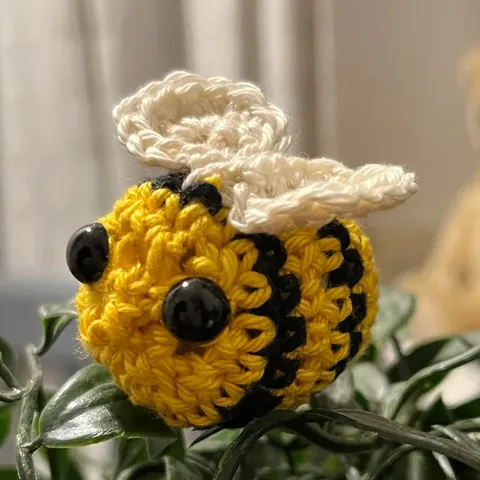
A crocheted bee made of yellow and black wool, with white wings and black bead eyes, among the leaves of a plant.

DichtBij, our side project

DichtBij is a small crocheted bee that writes little poems. Some are meant to make someone smile, others to make you stop and think about what happens in society.

It is a hobby project, next to our work. The name is a Dutch pun: dichten means writing poetry, a bij is a bee, and dichtbij means close by.

Deze bij,
Van klein formaat,

This bee, / of small size,

From the poem Introductie (in Dutch)

Build something together?

Send us a message if you have an idea, are missing something or would like to try a tool with your team. Tell us in a few sentences what it is about. We read everything, and it commits you to nothing.

Send us a message [email protected]